A warehouse shuttle is a programmable handling robot that picks up, transports and places goods in a high-density storage system. Communication with a supervisory computer or WMS, together with RFID or barcode identification, supports automated identification, storage and retrieval.
Storage and retrieval
For storage, the shuttle runs on rails below a pallet, raises its platform to lift the load and travels to the assigned location before setting it down. For retrieval, it brings a pallet from a deep storage lane to the lane entrance for collection by a forklift or stacker crane.
A forklift or stacker can move the shuttle between tracks so one unit can serve several lanes. The number of shuttles depends on lane depth, total goods volume and dispatch frequency. Speed, storage density, labour needs, space use and future expansion all affect system selection.
Cold-chain operations
Shuttles help organise high-density storage, make stock and location information easier to track, reduce handling damage and support control of expiry-related losses. Better space use and more consistent handling can reduce workload, operating costs and waste.
Retail
Frequent receiving and dispatch operations benefit from stable high-speed handling and accurate retrieval. Ergonomic picking stations can reduce identification time, movement frequency and reach, while handling larger order batches and supporting both B2B and B2C work. The article describes configurations with the storage efficiency of two or three conventional warehouses.
Furniture and home products
Shuttles can work with stacker cranes, conveyors and high-bay racks to supply finished goods and components to assembly lines. A shuttle running on rack-level tracks uses its load-handling mechanism to retrieve component totes for an outlet or store incoming totes at assigned locations.
Pharmaceuticals
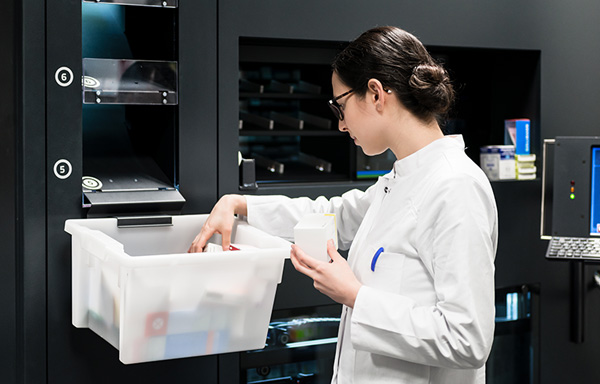
Shuttles, lifts and other equipment form a flexible automated flow. The article describes improved warehouse capacity and throughput, including examples where large-order processing time is reduced by half.
Power-sector materials
Power-sector stores handle many shapes, weights and material types across multiple locations. Combining shuttles, stacker cranes, AGVs and robotic arms supports central storage, unified scheduling, automated transport and intelligent picking. Standardised operation can reduce workload, errors, duplicated stock and storage costs, while supporting regional reserves, distribution and emergency response.
Building materials
Shuttles can connect high-bay racks, lifts, conveyors, sorting equipment and scheduling systems such as AUTOWCS. An integrated flow supports automatic put-away, more efficient picking and fewer intermediate handling steps.
Books and publishing
Goods-to-person systems combine conveyors, shuttle storage, high-bay storage and destination sorting to coordinate book allocation, packaging, quality checks and dispatch sorting. The equipment mix should reflect the industry’s actual storage and order-processing requirements.