Product overview
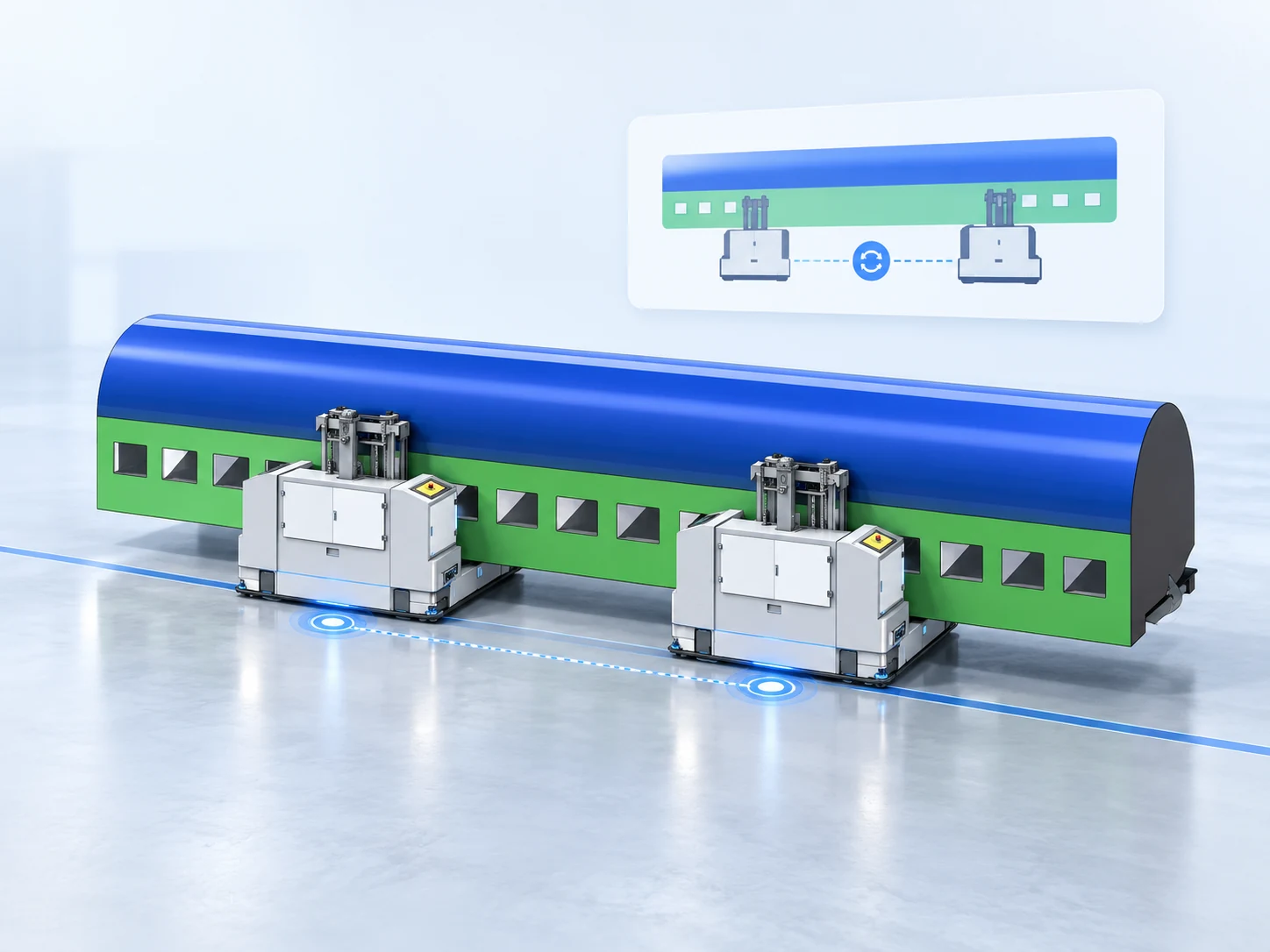
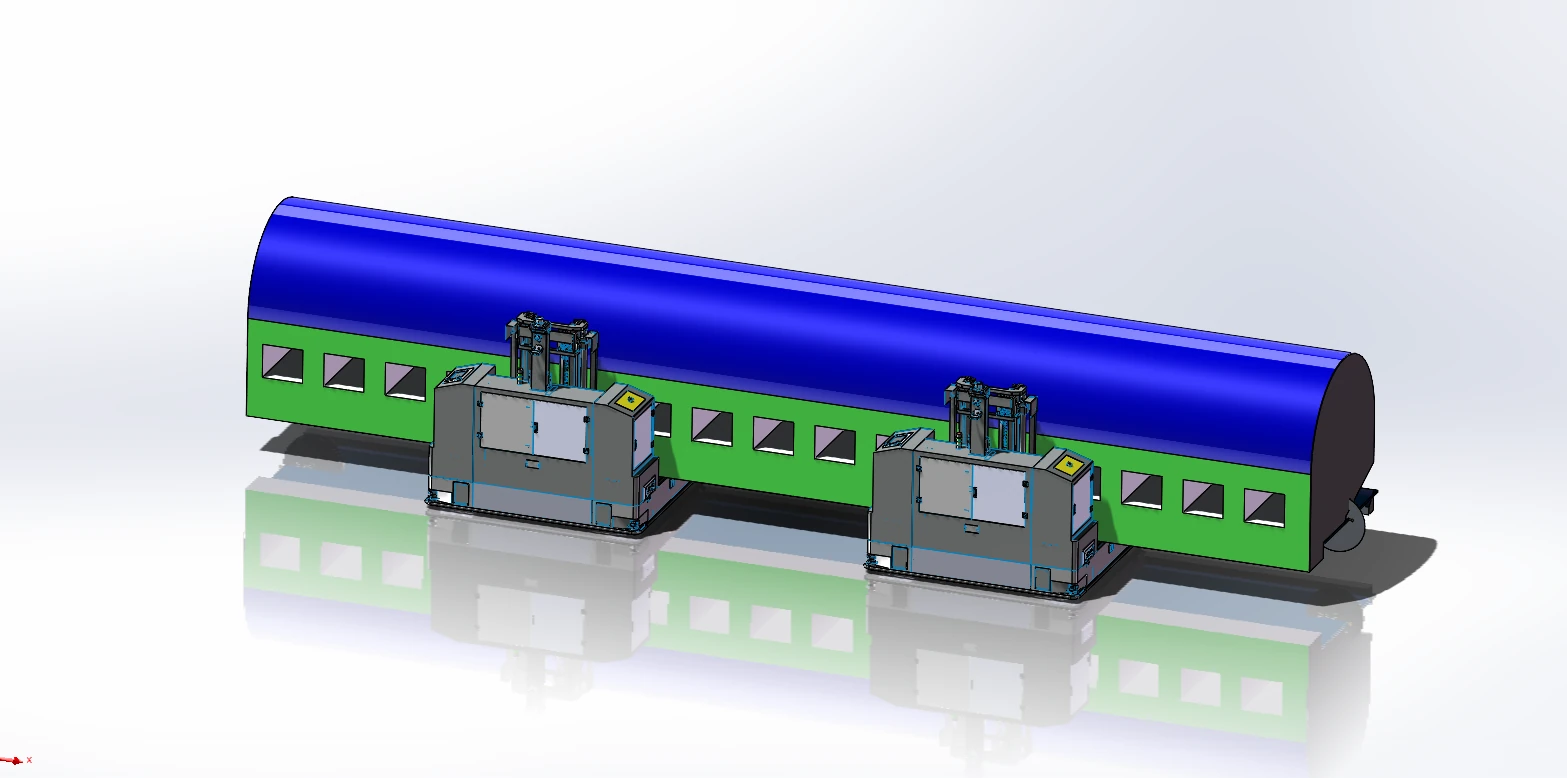
The system uses cooperative control algorithms to share a load between two AGVs and coordinate travel and lifting for goods that are difficult to handle with one vehicle.
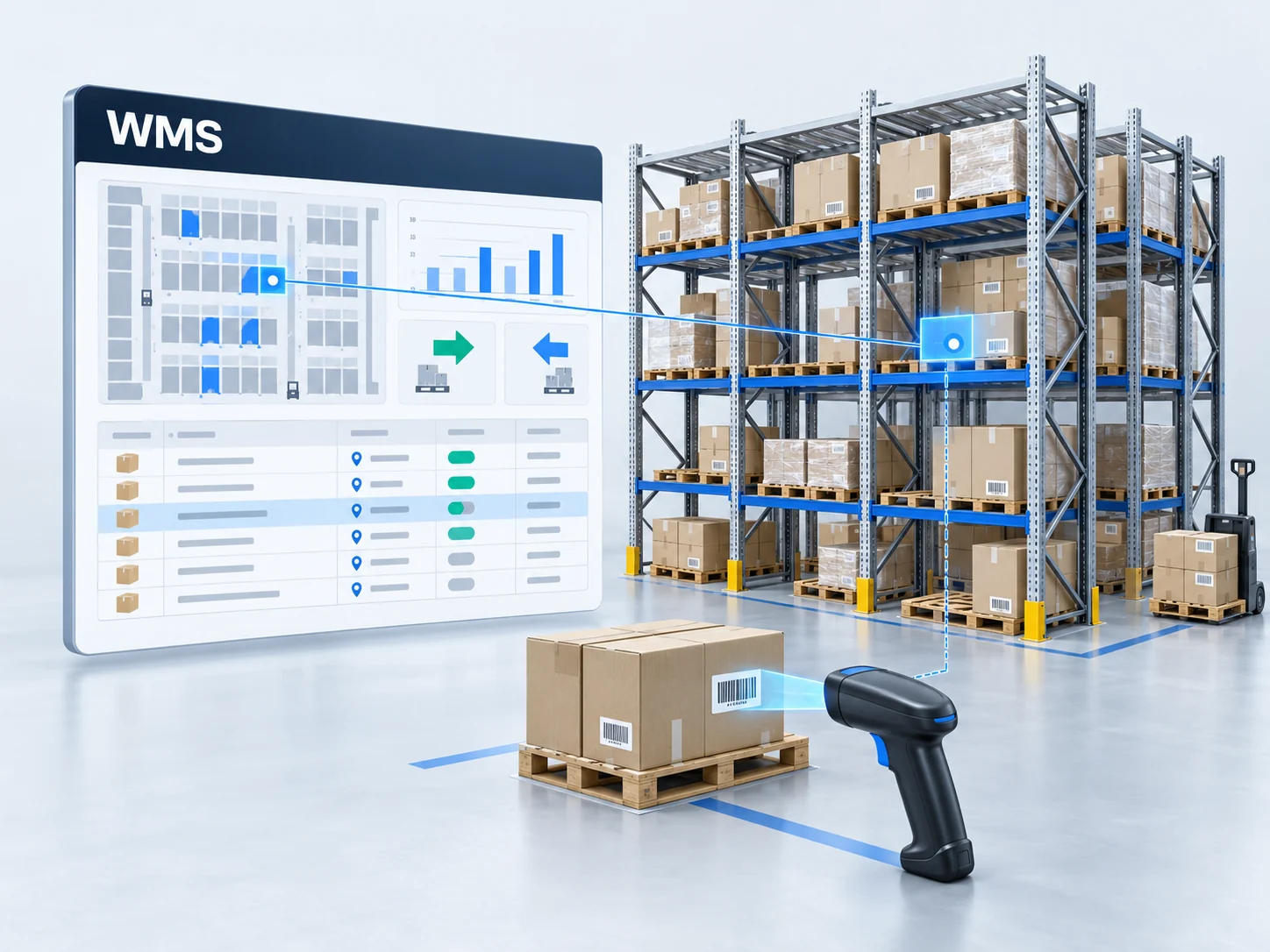
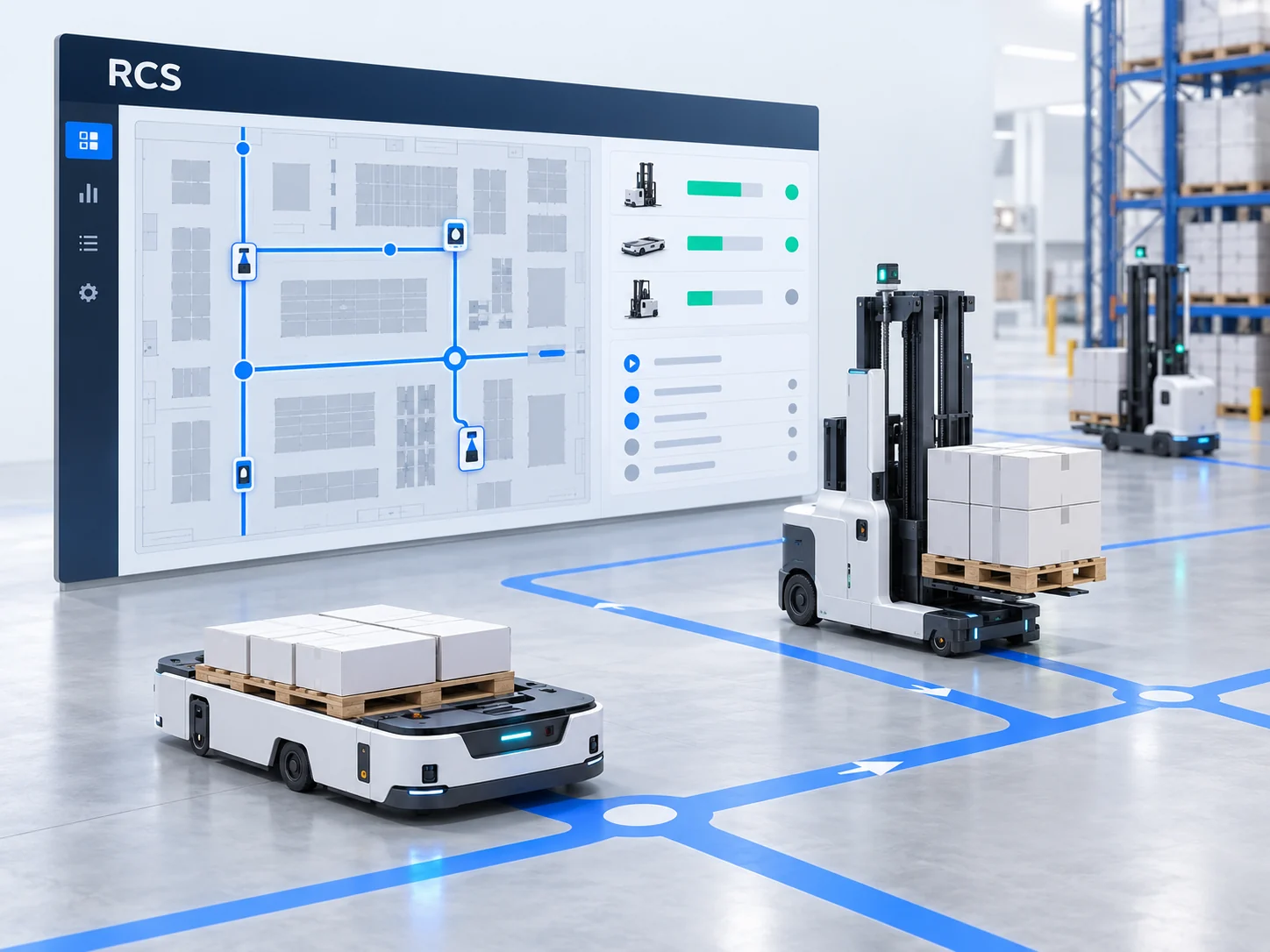
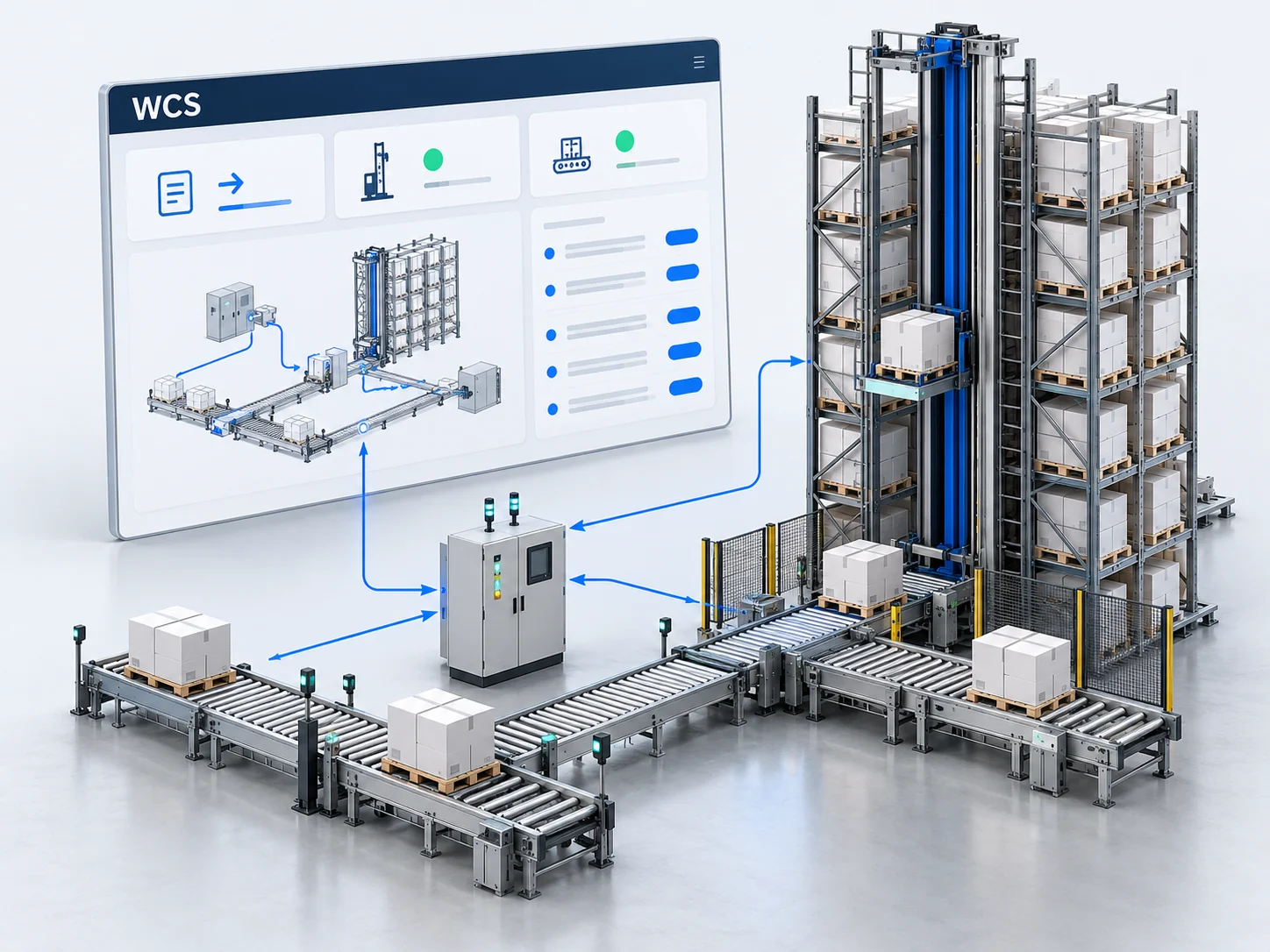
It supports switching between individual and paired operation and integration with RCS, WMS, MES, ERP and digital twin monitoring.
How it works
- RCS issues a cooperative task; the two vehicles exchange position, speed and lifting height through point-to-point communication.
- The primary vehicle calculates relative ΔX, ΔY and Δθ offsets and coordinates drive, steering and lift corrections.
- An obstacle event, emergency stop, fault or low battery on either vehicle interlocks both vehicles to stop; operation data can be sent to the digital twin platform.
Applications
For steel, aluminium, pipes, long profiles, heavy moulds, large castings and non-standard heavy pallets, as well as automotive and machinery-part logistics.
System views
Product highlights
- Synchronized controlCoordinate position, speed and lifting height.
- Shared load handlingUse two vehicles for large or irregular loads.
- Dual-vehicle interlocksStop both vehicles when either triggers an exception.
- Operating modesSwitch between individual and paired operation.
Technical specifications
Scroll horizontally to view all specifications.
| Item | Configuration |
|---|---|
| Compatible vehicles | Laser-navigation AGV range; omnidirectional AGVs are preferred for cooperation |
| Communication | 5G (A|N) point-to-point |
| Position synchronization deviation | ±50 mm |
| Lift synchronization deviation | ±30 mm |
| Reference cooperative speed | 0.6 m/s |
| Paired-vehicle rated load | 3000–8000 kg; customizable |
| Individual-vehicle rated load | 1500–4000 kg; depends on the selected vehicle |
| Safety configuration | Safety laser sensing, rubber bumpers and dual-vehicle interlocks |
| Integration | RCS, WMS, MES, ERP and digital twin monitoring |
Load and speed figures refer to the supporting vehicles and must be matched to vehicle types, cargo geometry and cooperative turning space.